Tibetan Mandala - Free Coloring Pages
20 mandalas to print for free
Explore the spiritual beauty of Tibetan Mandalas with our coloring mandala collection. Download and print these intricate designs for free for a relaxing and deep meditative activity. Let the colors guide you to a state of inner calm.
20 mandalas found
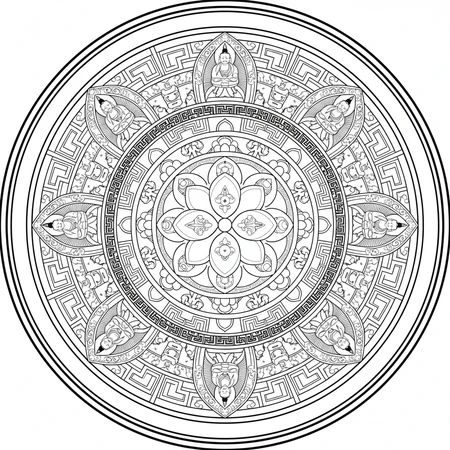
Tibetan Mandala #20
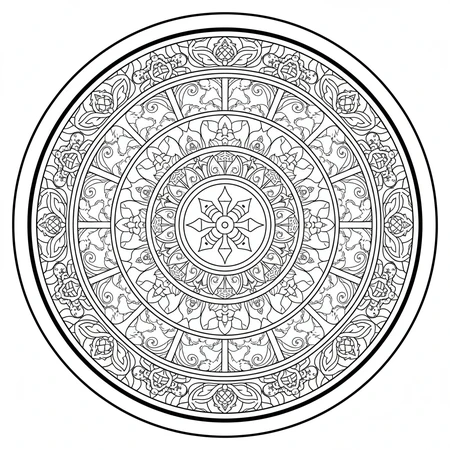
Tibetan Mandala #19
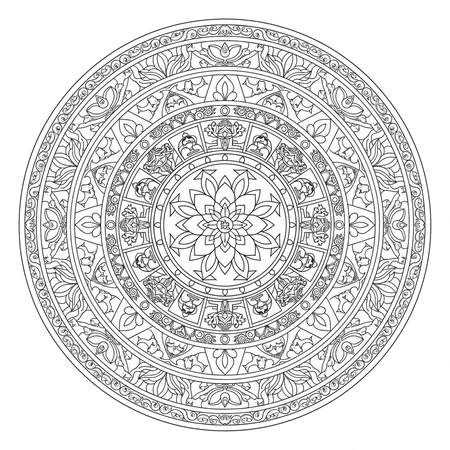
Tibetan Mandala #18
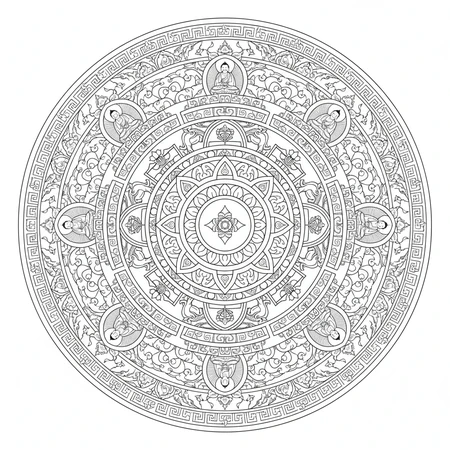
Tibetan Mandala #17
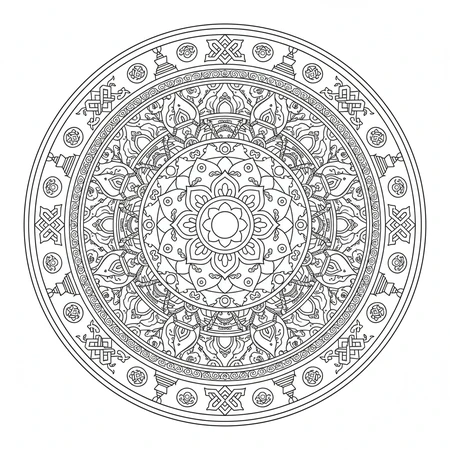
Tibetan Mandala #16
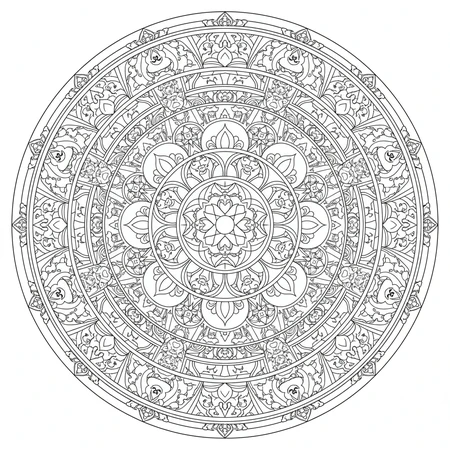
Tibetan Mandala #15
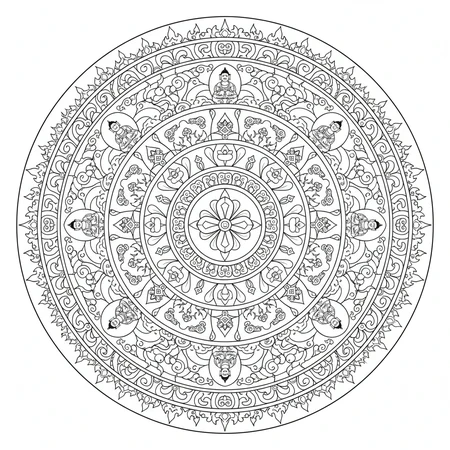
Tibetan Mandala #14
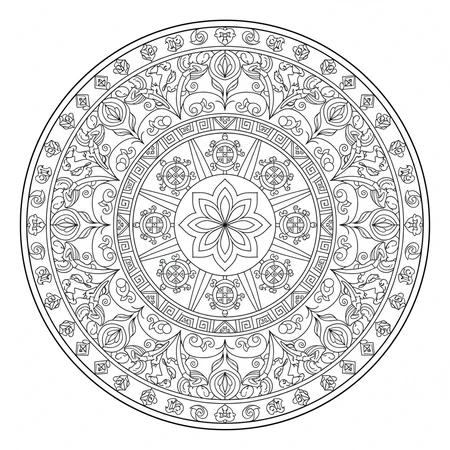
Tibetan Mandala #13
Tibetan Mandala #12
Tibetan Mandala #11
Tibetan Mandala #10
Tibetan Mandala #9
Tibetan Mandala #8
Tibetan Mandala #7
Tibetan Mandala #6
Tibetan Mandala #5
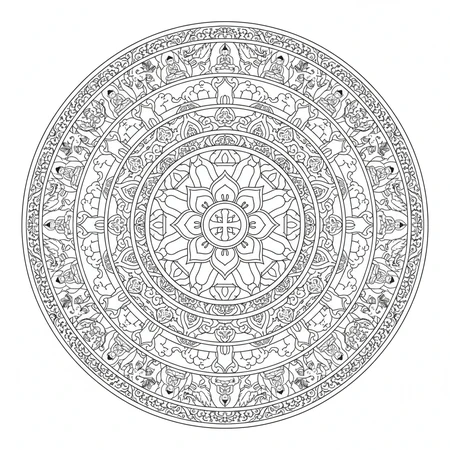
Tibetan Mandala #4
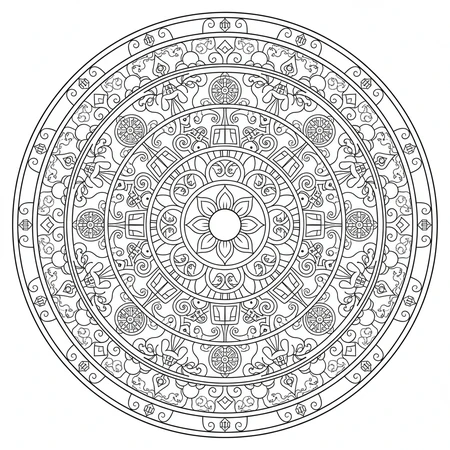
Tibetan Mandala #3
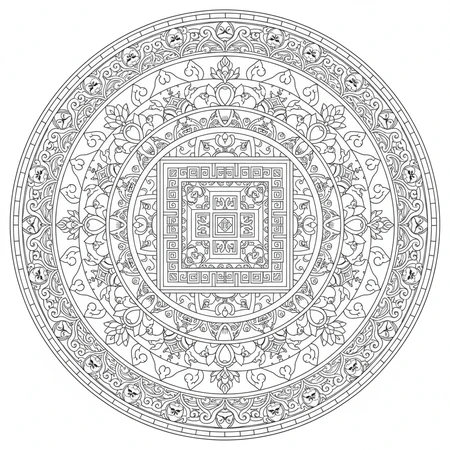
Tibetan Mandala #2
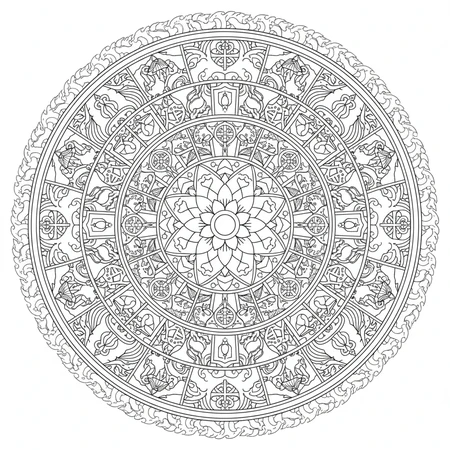
Tibetan Mandala #1
What's actually in this Tibetan mandala collection
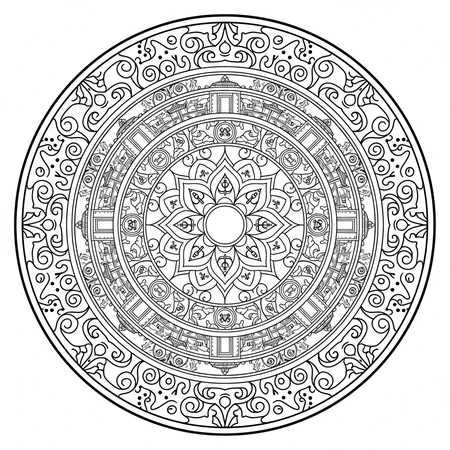
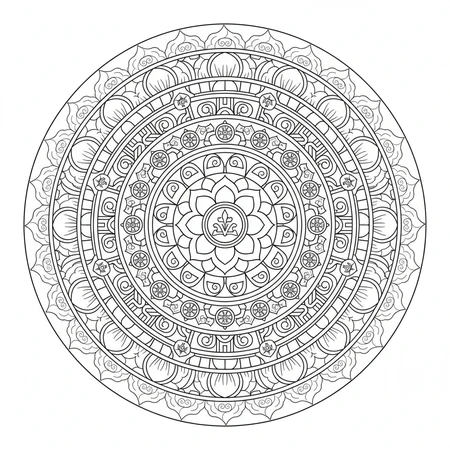
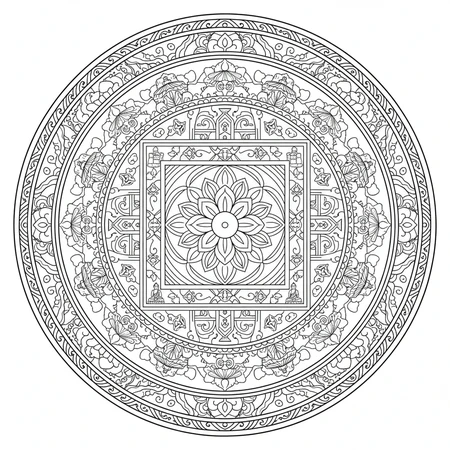
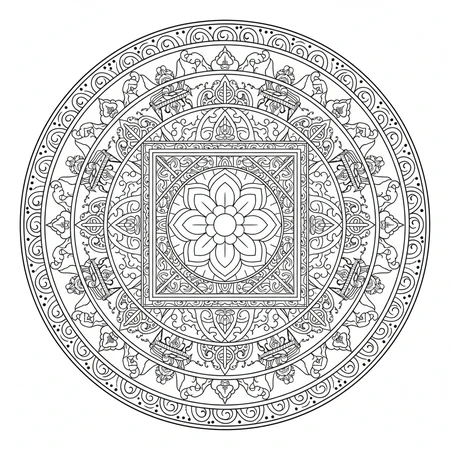
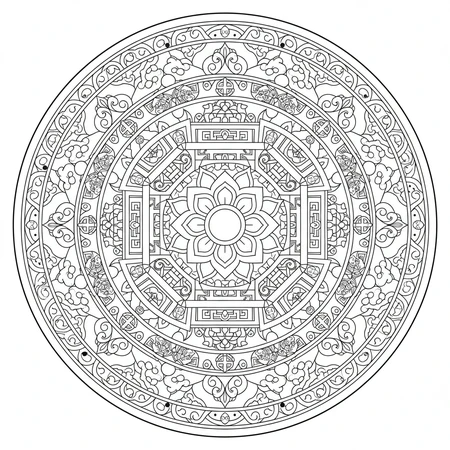
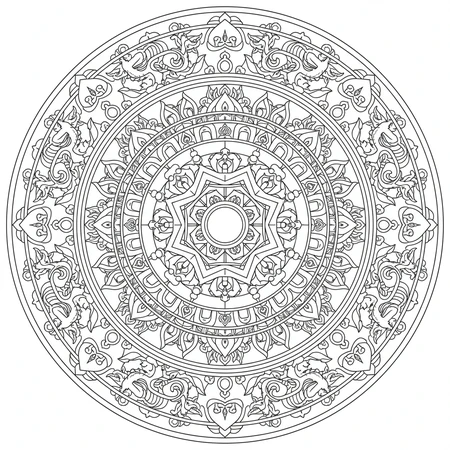
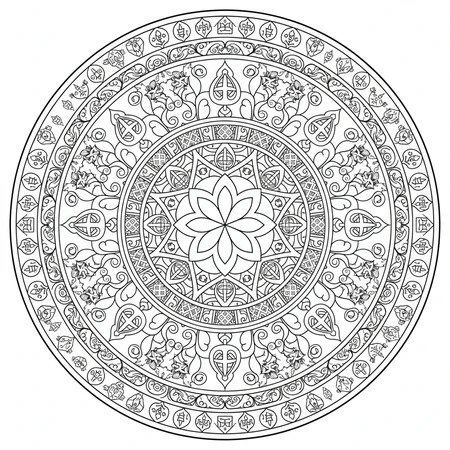
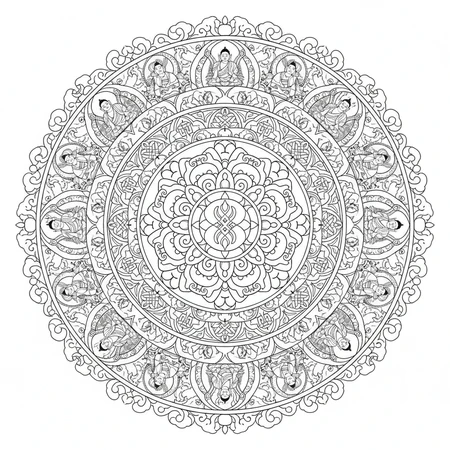
This category holds 20 printable Tibetan mandalas, each built on the same logic: a central motif surrounded by concentric rings that echo each other out to the edge of the page. Several sheets place a six-pronged vajra at the center, the ritual sceptre reduced here to a small circle held inside a thin ring. Other pages open with a four-petal rosette or an eight-petal lotus flower drawn in double thickness at the core. Around that center, the same recurring elements give the series its Tibetan signature: rings of lotus petals opening outward, an eight-point star radiating in eight directions, rows of small beads, circular bands packed with alternating micro-patterns, and often a square frame closing the composition. Every mandala in the set rearranges these pieces differently — on some pages two rounded-petal rings sit stacked on top of each other, on others as many as fifteen small compartments separate the center from the rest of the drawing.
Who these designs suit, and why
Because the layout builds outward ring by ring, these mandalas stay readable even for someone with little coloring experience — there's no figurative scene to interpret, just one band at a time. The 20 sheets suit a fairly wide range of colorists:
- beginners, who can start with the pages where only a few rings separate the center from the border;
- regular colorists, who'll find enough work in the doubled petal rings and multi-compartment bands to fill several sessions;
- anyone drawn to symmetry, thanks to the eight-direction stars and square frames that structure each page;
- anyone after a repetitive, calming activity, since the coloring motion naturally follows the ring pattern.
How to approach these Tibetan mandalas
The concentric structure suggests a simple working order: start with the central motif — vajra, rosette, or lotus — then move outward ring by ring, treating each band as its own small task. This keeps the busier compartments from feeling overwhelming, and lets you set one palette for the center, another for the petals, a third for the beaded rows or the square frame. On the pages where an eight-point star radiates outward, it's easier to color every other point in a first pass, then come back to the remaining points in a second shade — the alternating colors bring out the symmetry without needing to count segments precisely.
When to reach for these pages
A printable mandala from this set fits a number of moments:
- a short wind-down at the end of the day, enough time to fill in one or two rings;
- a quiet group activity, with everyone working at their own pace on the same kind of pattern;
- a focus for a meditative coloring session, since the repetition of petals and beads tends to settle attention;
- a piece worth framing once finished — the square borders lend themselves well to display.
What materials to have on hand
The fine lines separating the small compartments and beaded rows call for precise tools. Well-sharpened colored pencils let you shade the petal rings without bleeding into neighboring circles, while fine-tip markers handle the tighter details near the center better. For larger areas, like the double-thickness lotus petals, a broader marker tip or watercolor pencils speed things along. Printing on reasonably heavy paper keeps ink or color from showing through, especially where several layers build up on the same ring.
Frequently asked questions
Are these Tibetan mandalas suitable for kids?
The simpler sheets in the set — the ones with only a few rings between center and edge — work fine for a child who can stay focused on detailed coloring. Pages with fifteen or so compartments, or doubled petal rings, need more patience and suit an older colorist better.
Is there a correct order to color in?
Not strictly, but working ring by ring from the center outward makes the process more comfortable, since it avoids having to go back into a finished band to adjust a color.
What print size works best?
A4 is enough for most of the 20 mandalas in this category, but the busiest designs are worth printing at A3 — the small alternating patterns and beaded rows stay easier to see and color accurately at the larger size.
Do these motifs carry any particular meaning?
The vajra, the lotus, and the concentric-circle layout belong to the traditional visual vocabulary of Tibetan mandalas. Here they're offered purely as coloring material for their graphic richness — no prior knowledge of their symbolism is needed to enjoy the drawing.