Sun Mandala - Free Coloring Pages
20 mandalas to print for free
Explore our collection of Sun Mandala coloring pages, perfect for relaxation and meditation. Download and print our beautiful mandalas for a soothing creative activity.
20 mandalas found
Sun Mandala #20
Sun Mandala #19
Sun Mandala #18
Sun Mandala #17
Sun Mandala #16
Sun Mandala #15
Sun Mandala #14
Sun Mandala #13
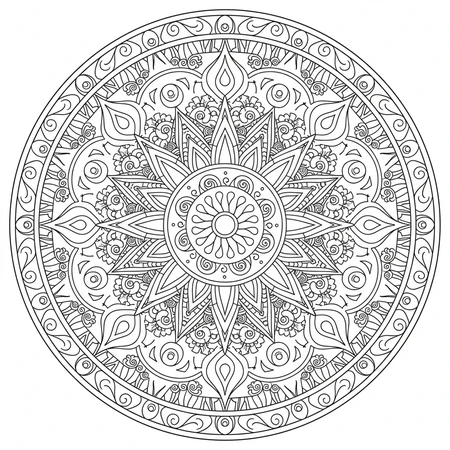
Sun Mandala #12
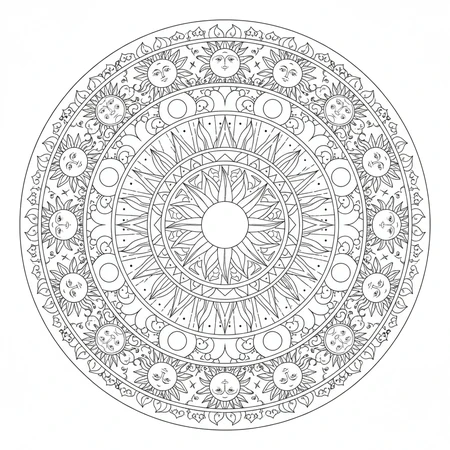
Sun Mandala #11
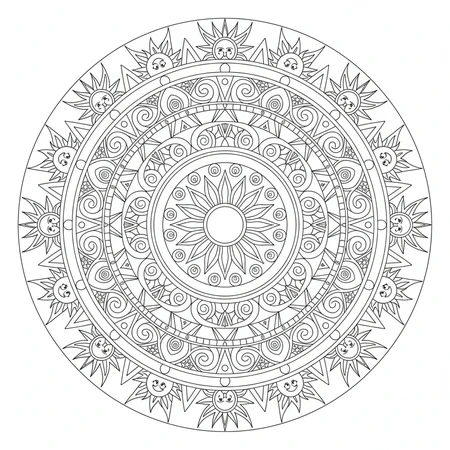
Sun Mandala #10
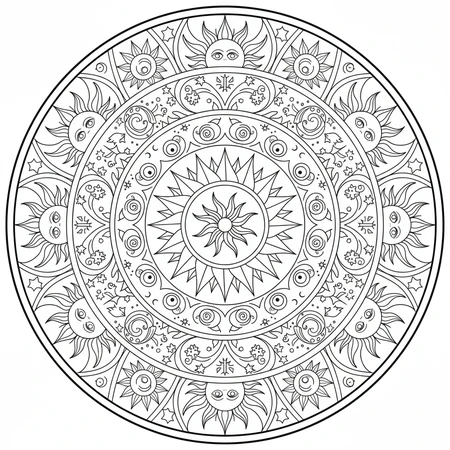
Sun Mandala #9
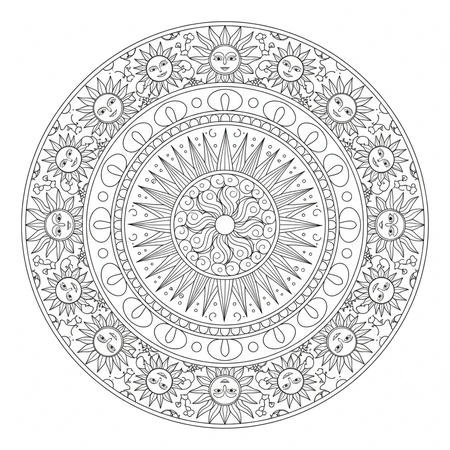
Sun Mandala #8
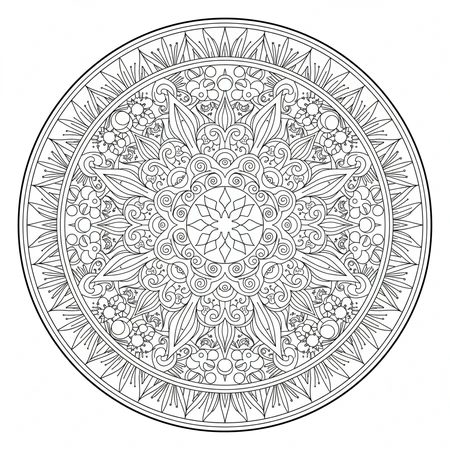
Sun Mandala #7
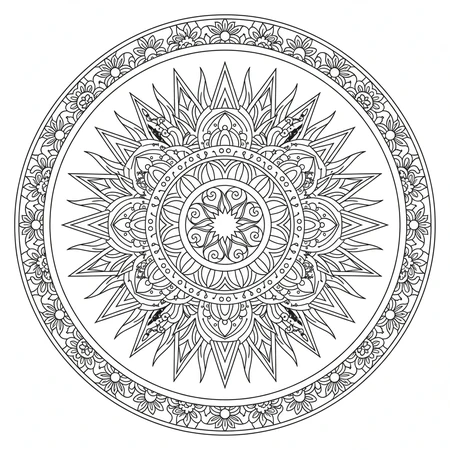
Sun Mandala #6
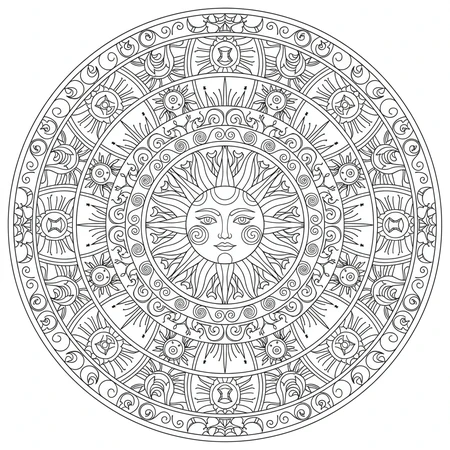
Sun Mandala #5
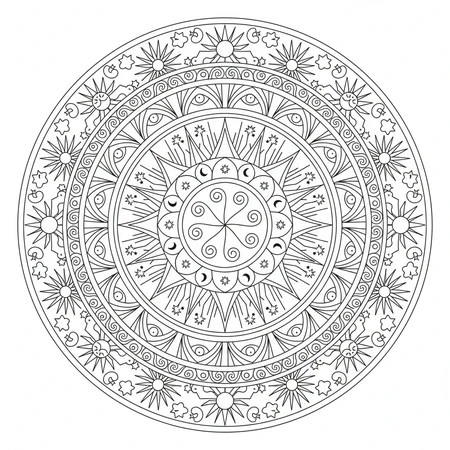
Sun Mandala #4
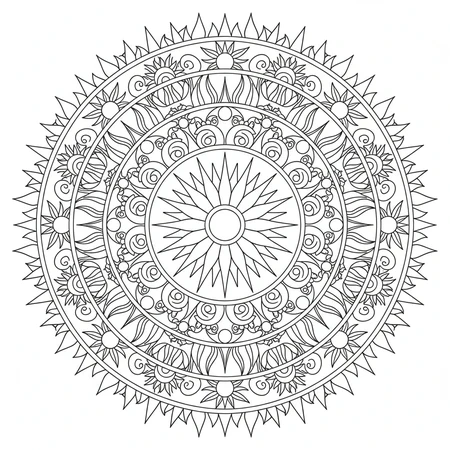
Sun Mandala #3
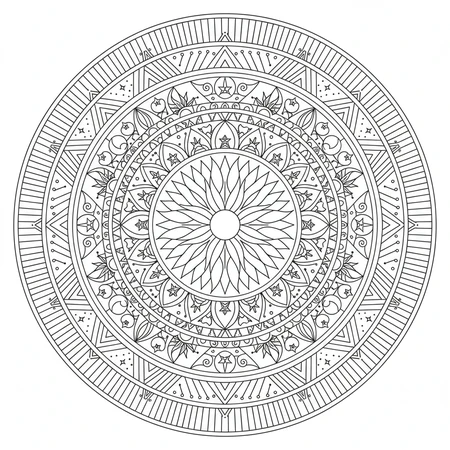
Sun Mandala #2
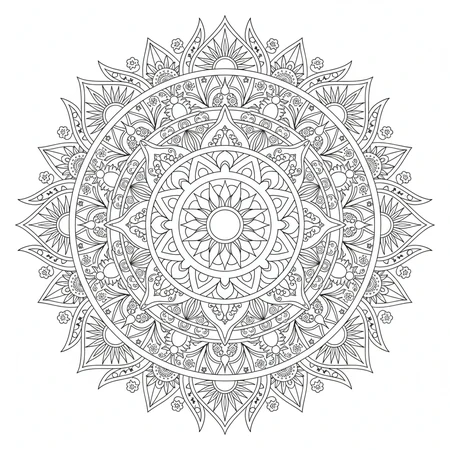
Sun Mandala #1
What the Sun Mandala collection actually includes
This page brings together 20 printable mandalas, each one built around the same central figure: a sun. The middle of the page is almost always a small disc, sometimes left empty, sometimes filled in, surrounded by short, tightly packed rays that read more like flames than plain geometric spokes. From there, each design fans out in concentric rings: a large star with sharp points, rows of small five-pointed stars, a thin ring of dots, sharply hatched pointed petals, tight little spirals dotted with points, or upright triangular points. Every sheet combines three to six of these rings in a different order, so the 20 pages feel like a family without ever repeating the same layout twice. Anyone who likes the first design will recognize the same energy on the other nineteen, with enough variation to keep a longer coloring session from feeling repetitive.
Who this collection suits, and why
A sun motif built from rays and rings of points tends to appeal more to people who enjoy radial, symmetrical patterns than to fans of figurative scenes. These pages work particularly well for:
- children starting out with geometric coloring, thanks to the wide ray sections that are easy to fill in one color at a time;
- teens and adults looking for a printable mandala with finer detail, such as the hatched petals or tight spirals, for a longer session;
- anyone who wants a calm, repetitive activity with no figurative detail to interpret;
- groups or classrooms, since the same ring-based structure runs through the whole set, which makes instructions easy to give once and reuse.
How to approach coloring these sun designs
The concentric-ring layout suggests a simple method: start with the central disc, which is often the only truly open space on the page, then work outward ring by ring. On the short, tightly packed rays, coloring every other ray already creates a sense of movement around the center. The rows of triangular points or five-pointed stars respond well to alternating two or three colors to bring out the rhythm of the border. The rings of finely hatched petals take more patience: a fine pencil or fine-tip marker keeps the color inside the small hatched sections. The thin ring of dots can act as a visual break between two busier rings, either left white or filled in a single neutral shade.
When to reach for this printable mandala
The format suits a number of concrete situations:
- a 15-to-20-minute break after school or work;
- a quiet activity for a waiting room, train, or car ride, since a single printed sheet is easy to carry;
- material for a workshop or classroom, handing out a different sheet to each participant while keeping a consistent look across the group;
- an evening wind-down session, since the wider ray sections need less light and precision than more crowded mandalas.
What you need to color them well
Nothing beyond ordinary coloring supplies is required:
- colored pencils for the large ray sections, which blend easily from one shade to another;
- fine-tip markers or pens for the hatched petal rings and the small stars;
- reasonably thick paper if using markers, so the ink doesn't bleed through;
- a scrap sheet placed under the printed page as a precaution.
Frequently asked questions
Is there a set order for coloring these mandalas?
No, but working from the central disc out toward the outer rings makes the pattern easier to read and helps avoid skipping a section, especially on sheets that combine four or five different rings.
Are these mandalas suitable for a young child?
Yes, for the sheets with wider, fewer rays; the rings with heavily hatched petals or tight spirals need more dexterity and suit an older child or an adult better.
Can I print several sun mandalas in a row?
Yes, that's part of the point of the set: all 20 pages share the same underlying structure, which makes it easy to put together a coherent coloring session without the style shifting sharply from one page to the next.
What print size works best?
A standard letter or A4 size is enough to render both the large ray sections and the finer details, like the hatching or the ring of dots, as long as it's printed at good resolution.